
Blog entry by Sam Sam
Published Date: 16 January 2026
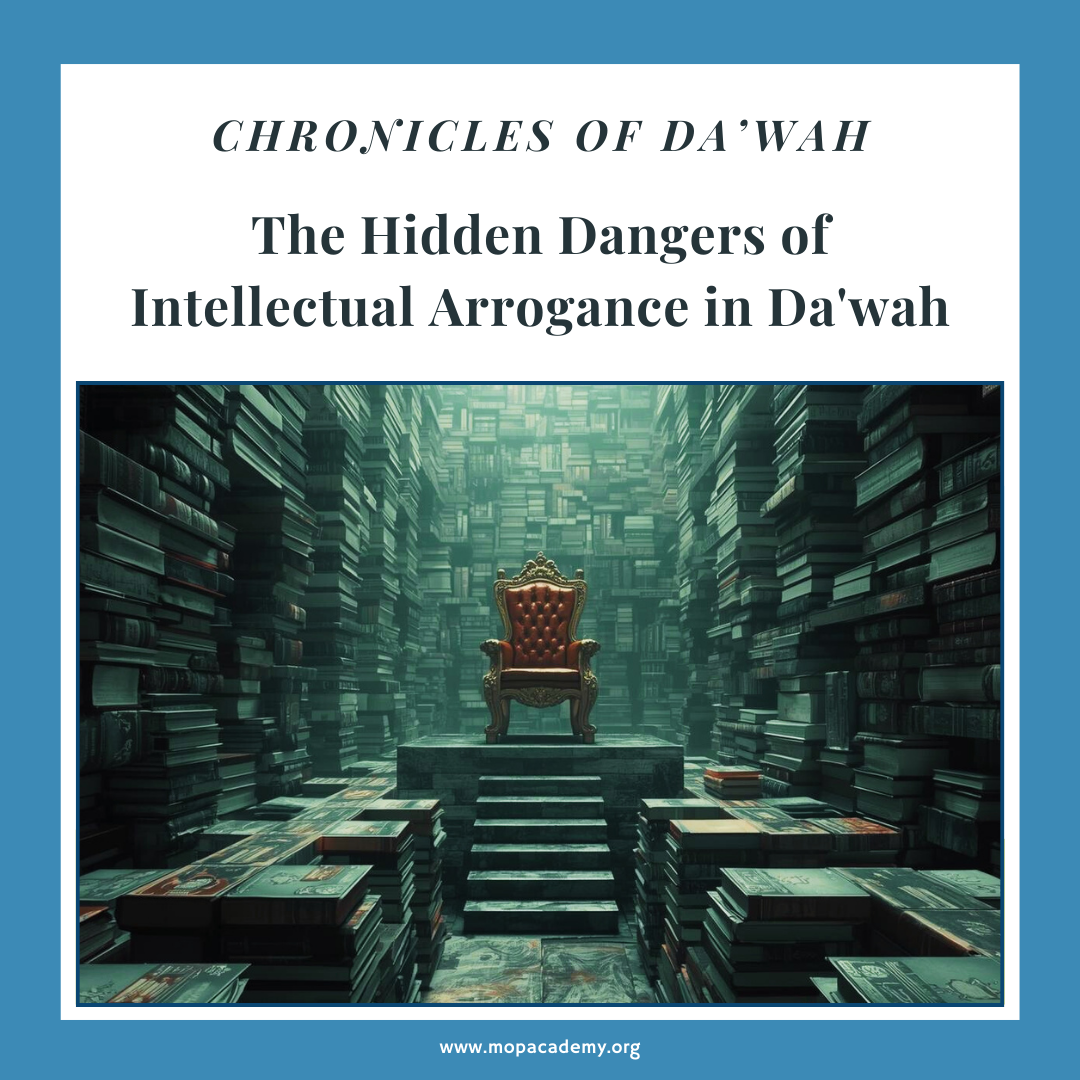
Balancing confidence with humility when teaching and debating
Da'wah requires knowledge. It requires clarity, confidence, and the ability to articulate truth. But one of the most subtle and dangerous threats to effective Da'wah is not ignorance. It is intellectual arrogance.
Intellectual arrogance appears when knowledge stops being a means of guidance and quietly becomes a source of superiority. When winning arguments feels more important than winning hearts. When being correct overshadows being compassionate.
This danger is especially hidden because it often disguises itself as strength, confidence, or sincerity. Yet its impact can quietly undo the very purpose of Da'wah.
Knowledge Is a Trust, Not a Trophy
In Islam, knowledge is an amanah. It is given to guide, not to dominate.
Allah says: “And do not walk upon the earth exultantly. Indeed, you will never tear the earth apart, nor will you ever reach the mountains in height.” (Qur’an 17:37)
Knowledge that leads to humility draws people closer. Knowledge that leads to arrogance pushes hearts away, even if the information itself is correct.
The Prophet ﷺ warned against knowledge that is sought for the wrong reasons. He described people who learn in order to argue, show superiority, or gain attention. Such knowledge brings no light to the heart, even if it sharpens the tongue.
When Confidence Becomes Contempt
Confidence in Da'wah is necessary. Doubt and hesitation can weaken delivery and confuse listeners. But confidence must be rooted in humility, not ego.
The danger arises when confidence turns into:
-
Talking down to people
-
Dismissing sincere questions as ignorance
-
Mocking opposing views
-
Treating conversations as debates to be won
Allah describes one of the greatest spiritual illnesses: “In the hearts is a disease, so Allah increased their disease.” (Qur’an 2:10)
Many scholars explain that this disease includes arrogance. Not always arrogance toward Allah, but arrogance toward people. In Da'wah, this can manifest as assuming moral or intellectual superiority rather than shared human struggle.
Arrogance Blocks Guidance, Even When Truth Is Spoken
Truth alone does not guarantee acceptance. How truth is delivered matters.
Allah instructed Musa and Harun when sending them to Pharaoh, one of the most arrogant tyrants:
“Speak to him gently, that perhaps he may take heed or fear Allah.” (Qur’an 20:44)
If gentleness was commanded when addressing Pharaoh, it is certainly required when addressing everyday people who are sincerely searching, confused, or defensive.
Intellectual arrogance hardens hearts before the message even arrives. A person may reject not Islam itself, but the attitude attached to it.
The Illusion of Winning Arguments
One of the traps of Da'wah in the modern age is the performance of debate. Social media, comment sections, and public discussions reward sharp responses, quick rebuttals, and intellectual dominance.
But Da'wah is not about defeating opponents. It is about guiding people.
The Prophet ﷺ said that Allah dislikes harshness and loves gentleness in all matters. Many people leave conversations feeling intellectually defeated yet spiritually untouched.
A daʿiyah must ask themselves honestly: Am I trying to guide, or am I trying to prove I am right?
True Strength Is Humility
Humility does not mean lack of knowledge. It means recognising the limits of one’s knowledge, the complexity of human hearts, and the role of Allah in guidance.
Allah says: “Above every possessor of knowledge is one more knowing.” (Qur’an 12:76)
The most effective callers to Allah are those who:
-
Speak with certainty but listen with sincerity
-
Teach confidently while remaining open to learning
-
Correct with mercy, not humiliation
-
Admit when they do not know
Humility invites trust. Trust opens hearts. Hearts are where guidance settles.
The Inner Work of the Daʿi
Intellectual arrogance often grows quietly. It requires inner work to prevent it.
A daʿi should regularly ask:
-
Do I feel annoyed when questioned?
-
Do I enjoy debates more than dialogue?
-
Do I feel validated when others are silenced?
-
Am I seeking Allah’s pleasure or intellectual recognition?
The Prophet ﷺ consistently made duʿā’ for a sound heart. Knowledge without purification can become a burden rather than a blessing.
Balancing Confidence With Humility
The balance is not easy, but it is essential. Confidence without humility leads to arrogance. Humility without confidence leads to confusion.
The prophetic way combines both. Speaking the truth clearly, firmly, and unapologetically, while maintaining gentleness, patience, and respect.
Allah summarises this balance beautifully:
“Invite to the way of your Lord with wisdom and good instruction, and argue with them in the best manner.” (Qur’an 16:125)
The phrase “the best manner” is not optional. It is a condition.
A Call to Action
If you are involved in Da'wah, teaching, or debating, take time this month to audit your intention and tone. Seek knowledge continuously, but seek humility even more. Prepare your arguments, but soften your heart. Be confident in the truth, but gentle with people.
At Messengers of Peace Academy, we believe that Da'wah flourishes when knowledge is paired with character, and confidence is grounded in humility.
Because the goal of Da'wah is not to win debates. It is to invite hearts to Allah. And hearts open where humility leads.